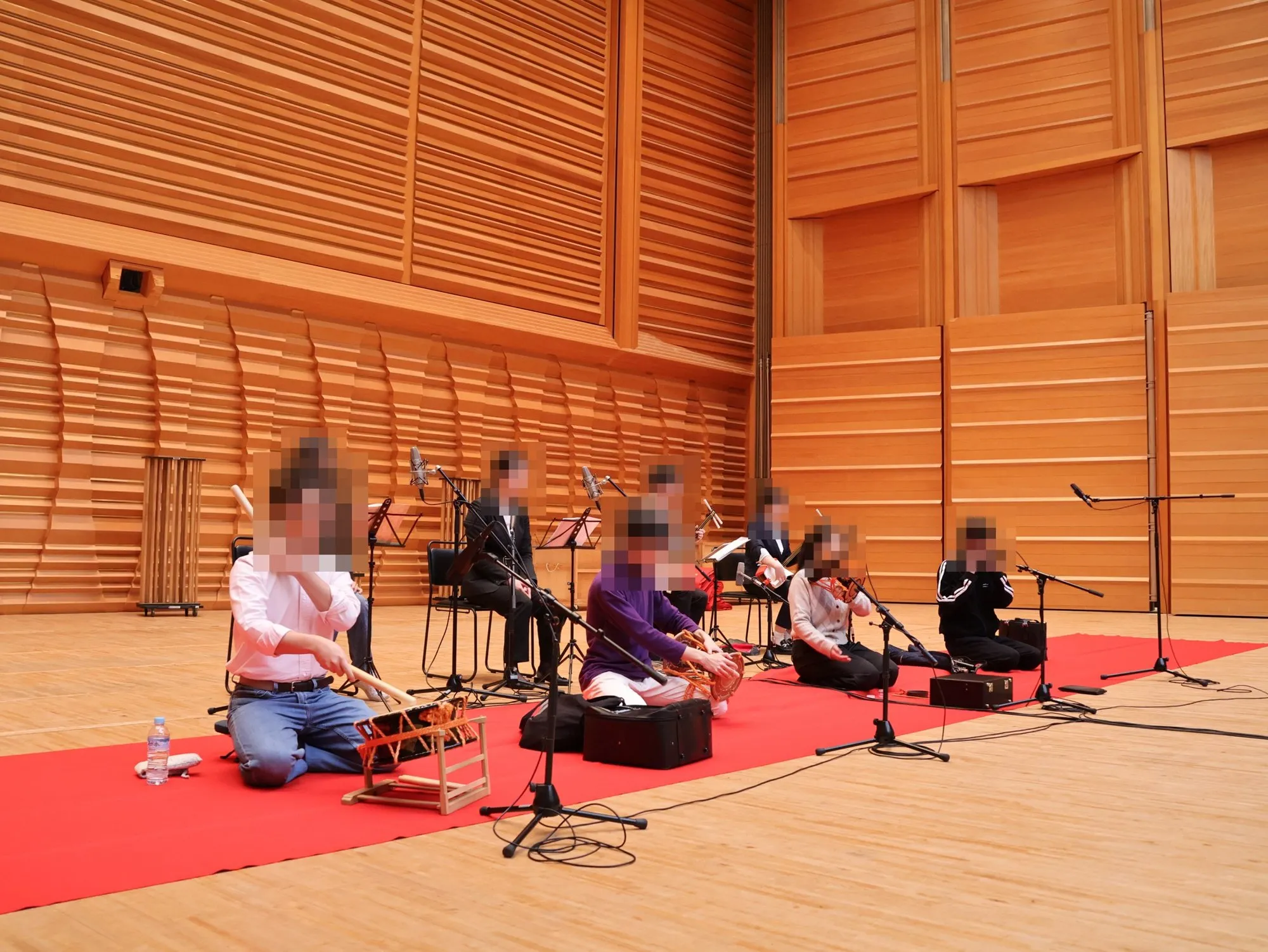
At a kabuki play or a Japanese dance (nihon buyō) performance, you hear more than the shamisen and the singers. Drums and flutes join in as well. This ensemble is called hōgaku hayashi.
I study nagauta shamisen in the Department of Traditional Japanese Music at Tokyo University of the Arts (Geidai). A nagauta performance is only complete when the singers, the shamisen and the hayashi play together. This article introduces hōgaku hayashi, focusing on each instrument.
Nagauta: voice, shamisen and hayashi
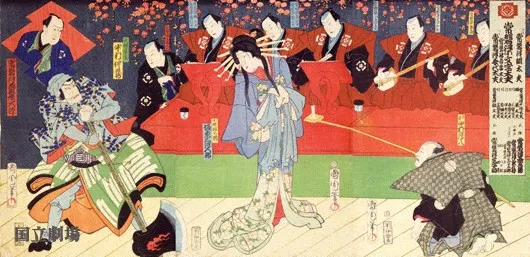
Shamisen music has many genres and schools. Nagauta is the one that grew up in the theater, as accompaniment for kabuki and Japanese dance.
On stage, the music is divided among three groups of specialists.
| Role | Instruments |
|---|---|
| Utakata | Voice |
| Shamisenkata | Shamisen |
| Hayashikata | Kotsuzumi, ōtsuzumi, taiko, fue and others |
A little about the shamisen
Before we get to the hayashi, a few words about the shamisen, the heart of nagauta.
Where the shamisen came from
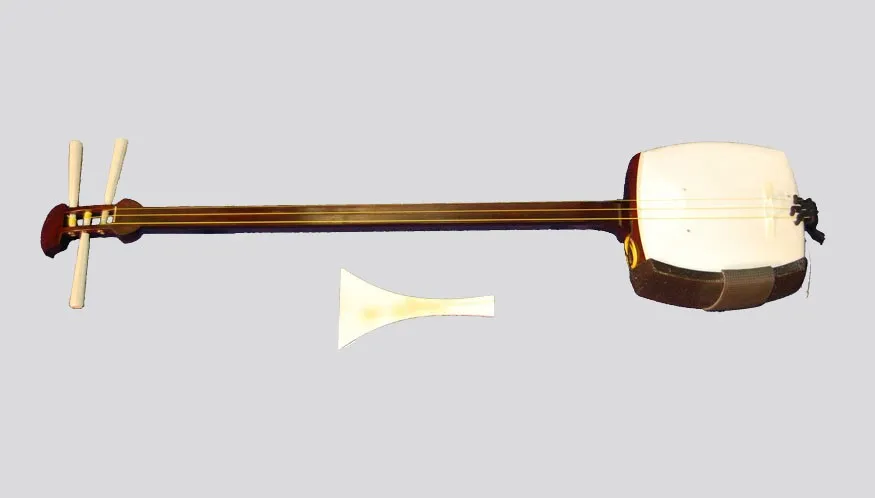
The shamisen is usually traced back to the Chinese sanxian. It traveled to the Ryūkyū Kingdom (today’s Okinawa), where it became the sanshin, and reached mainland Japan around the late Muromachi period. Japanese musicians adapted it into the shamisen.
In its early days in Japan, the shamisen is said to have been played by biwa hōshi, blind itinerant musicians who sang stories to the biwa lute. It spread widely in the Edo period, together with kabuki.
Sawari: the buzz of the shamisen
The shamisen’s signature sound comes from sawari. The lowest string, the ichi no ito, is set so that it lightly touches the top of the neck. When it is plucked, it produces a buzzing resonance. When another string resonates with the lowest one, the same buzz is added.
The sanshin has no such mechanism. Sawari and the use of a large plectrum (bachi) are thought to have come largely from the biwa hōshi who took up the shamisen.
What is hōgaku hayashi?
The word hayashi comes from the verb hayasu, “to liven up.” Centered on four instruments, the fue, kotsuzumi, ōtsuzumi and taiko (together called shibyōshi), the hayashi supports and heightens plays, dances and music from behind the scenes.
It is different from the matsuri bayashi heard at festivals and from the nōgaku hayashi of Noh theater. What we call hōgaku hayashi is the hayashi that plays with nagauta and other shamisen music.
A short history
The origins of the hayashi go back to the Heian period. It began with music for the nōkan flute; drums and later the shamisen were added over time.
The hayashi entered kabuki about 400 years ago and was long called kabuki bayashi or nagauta bayashi. Because it plays with many genres besides nagauta, it has been called hōgaku hayashi since around 1970.
Counting together
Hayashi players use their own way of counting, such as “tsuha, hha, iyo, o, tsuho, hho, tot, tan.” It helps the players keep time together and check the rhythm.
The four instruments
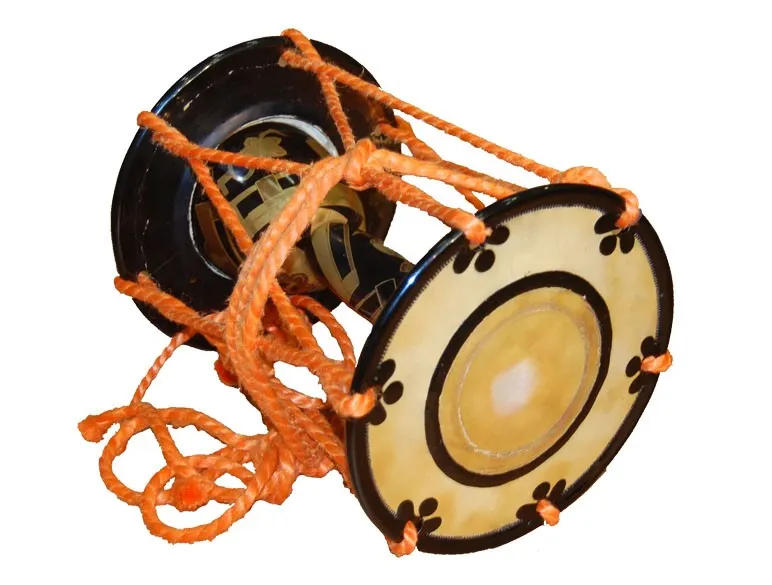
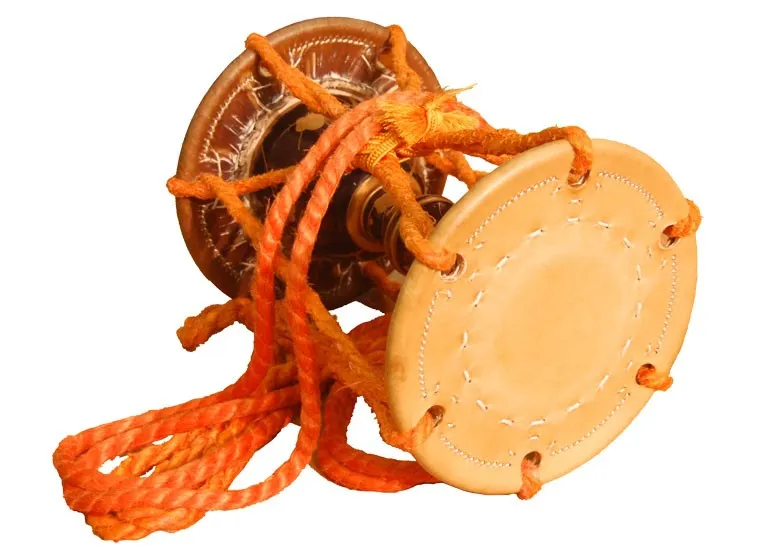
Kotsuzumi (small hand drum)
Held on the right shoulder and struck with the palm.
- Skin: horsehide
- Preparation: the skins are moistened before playing to bring out the right tone
- Sound: by changing the stroke and the grip on the cords (shirabe), players produce different sounds such as “ta” and “pon”
- Patterns: rhythmic patterns (tegumi) include chirikara and uchihanashi
Ōtsuzumi (large hand drum)
Held on the left knee.
- Skin: with its larger drumhead, it would normally give a low pitch
- Preparation: the skins are dried over heat before playing and laced tightly, so it produces a high, sharp sound instead
- Patterns: it shares patterns such as chirikara with the kotsuzumi
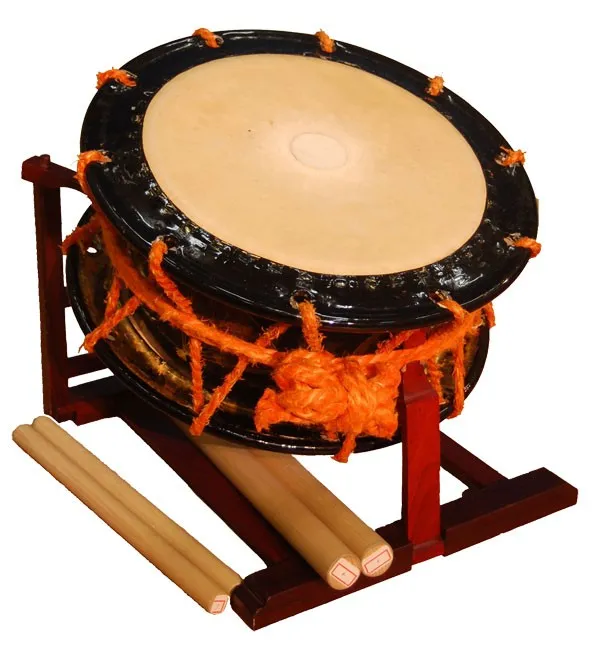
Taiko (stick drum)
A laced drum set on a stand and played with two sticks.
- Lacing: the skins are laced very tightly. In Noh, the lacing is tightened by hand; in kabuki and hōgaku hayashi, a tool called an agebachi is used
- Patterns: depending on the school, there are said to be about 100 rhythmic patterns
Fue (flutes)
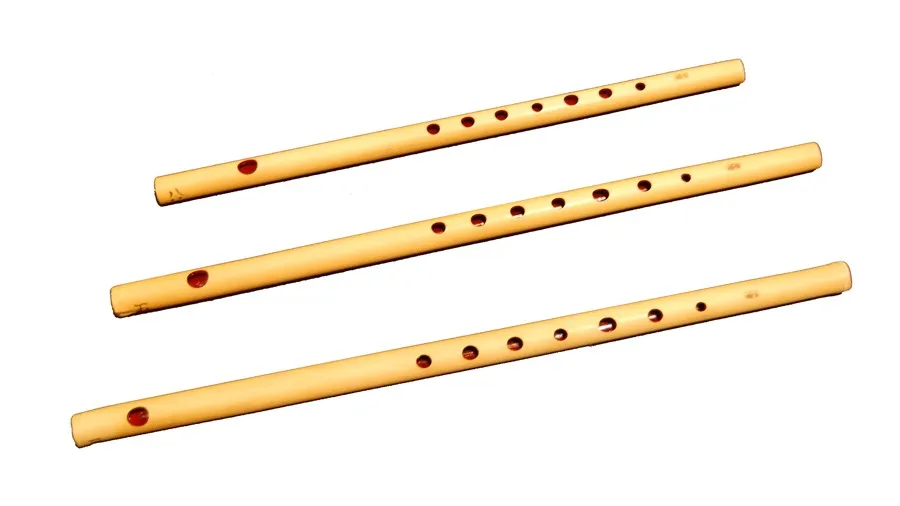
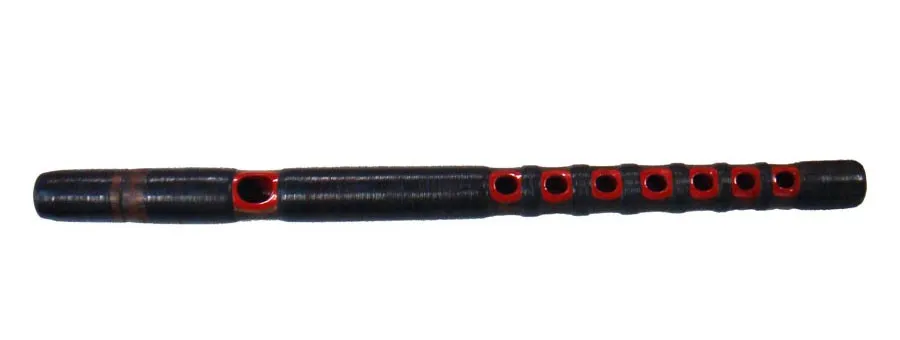
Kabuki hayashi uses two kinds of flute.
- Nōkan: the flute also used in Noh, with a sharp, distinctive sound
- Shinobue: a bamboo flute that can play melodies
Kage bayashi: music from behind the screen
In kabuki, music is also played inside the kuromisu, a black bamboo screen on the left side of the stage as seen from the audience. This offstage music is called kage bayashi, also known as geza ongaku or kuromisu ongaku.
- Instruments: there are said to be about 20 kinds each of skin, metal and wooden instruments, plus some 70 kinds of whistles that imitate birds, insects and more
- Sound effects: insect whistles, a large bass drum and other instruments paint the scene. The ōdaiko’s “hyū-doro-doro” is the classic sound of a ghost appearing
The music supports the play not only on stage but also from places the audience cannot see.
Shōga: singing the sounds
Both the shamisen and the hayashi use shōga, a way of putting sounds into syllables. For the shamisen it is also called kuchi-jamisen, “mouth shamisen”: syllables such as “chin,” “ton” and “ten” show which string is played and how.
By singing the shōga, you can grasp, to some extent, which string is being played and what the rhythm is. Timing (ma) and tone colors that are hard to read from notation are learned through shōga.
Summary
- Nagauta is theater music made by singers, shamisen players and hayashi players
- Hōgaku hayashi livens up plays and dances, centered on the four instruments: fue, kotsuzumi, ōtsuzumi and taiko
- The kotsuzumi’s skins are moistened, while the ōtsuzumi’s are dried over heat
- Offstage, kage bayashi provides sound effects and atmosphere
Performance requests
For performances, workshops and lectures, please get in touch through the contact form.